DMH OUTDOORS Vehicle Awning for Roof Rack Setups
The DMH OUTDOORS 8.2×8.2 vehicle awning is a pull-out shade system built for SUVs, trucks, Jeeps, and vans — anyone who wants a quick, solid canopy at a lunch stop, campsite, or trailhead without unpacking a separate shelter. It's made for the driver who covers real miles, wants genuine weather and UV protection when parked, and needs a setup that doesn't eat 30 minutes of daylight.

Key Specifications
One model, one job done right. Here's the full spec breakdown for the DMH OUTDOORS 8.2×8.2 vehicle awning so you're not hunting across product listings to piece it together.
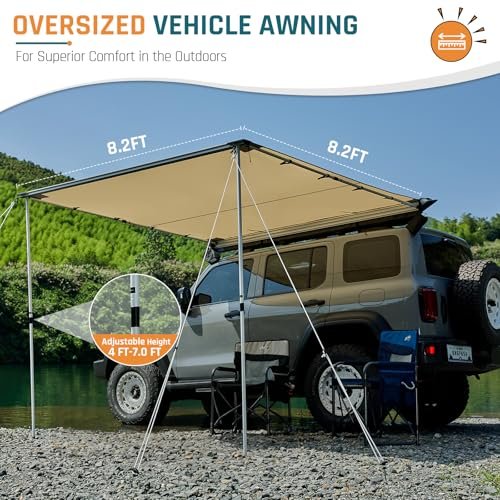
| Deployed Size | 8.2 ft × 8.2 ft (98.4 × 98.4 in.) |
|---|---|
| Stowed Depth (Case) | 79.2 in. (6.6 ft.) along roof rack |
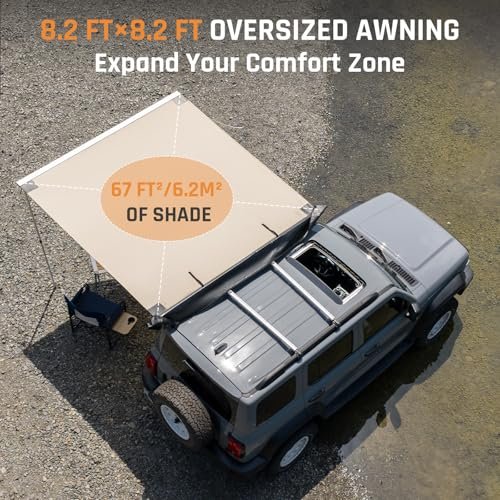
| Coverage Area | ~67 sq. ft. of usable shade |
| Fabric | 420D Ripstop Oxford |
| Waterproof Rating | PU1000mm |
| UV Protection | UPF 50+ |
| Vehicle Compatibility | Jeep, SUV, Truck, Van, Car with standard roof rack crossbars |
| Hardware Included | Yes — mounting hardware included |
| Unit Count | 1 |
| Color | Beige |
| Model Number | HW-2 |
This is a one-size solution — 8.2×8.2 covers a full camp kitchen or seating area for four adults, which hits the practical sweet spot for most SUV, truck, and Jeep setups without requiring a second awning panel for typical use.
What to Look for in a Roof Rack Awning
The two things that separate a vehicle awning that earns its spot on your roof rack from one that gets returned after one trip are fabric weight and coverage area. The DMH OUTDOORS awning uses 420D ripstop Oxford — that denier rating (420D) puts the thread thickness well above the 150D–210D fabric common on budget canopies. Ripstop weaving means a small puncture or abrasion doesn't turn into a spreading tear by the time you get home. That's the kind of durability that actually shows up after a season of use, not just on a spec sheet.
Coverage area matters more than the folded dimensions. At 8.2×8.2 feet fully deployed, this awning provides approximately 67 square feet of usable shade — enough to cover a folding table, four chairs, and a cookstove with room to move around the perimeter. Compare that to awnings marketed as "6.6×8.2 ft" that deliver around 32 square feet of actual coverage: the difference is a shaded meal area versus a shaded cooler.
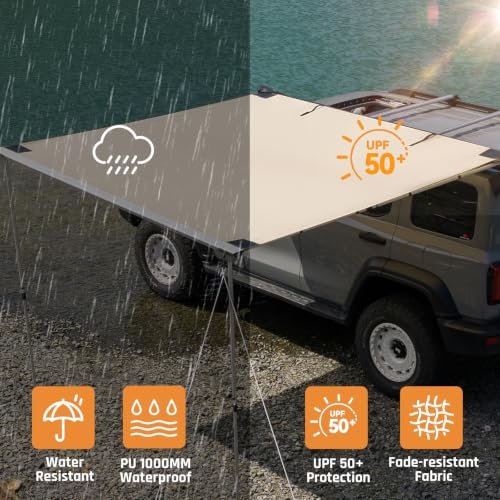
For sun protection specifically, look for a verified UPF rating rather than a vague "sun-blocking" claim. UPF 50+ means the fabric blocks 98%+ of UV rays — relevant for anyone spending hours under the awning in direct summer sun. The PU1000mm waterproof coating handles light-to-moderate rain. That's the honest position for this product: it's not a storm shelter, but it keeps you and your gear dry through passing showers and camp-morning drizzle. If your trips regularly involve prolonged heavy rain, pair the awning with a tarp extension on the open sides.
- Fabric denier: 420D is the threshold where vehicle awning fabric becomes genuinely durable; anything below 300D is a one-season gamble.
- Coverage area: Lead with square footage, not folded dimensions — 67 sq. ft. is a usable campsite zone.
- UV rating: UPF 50+ blocks 98%+ of UV; important for mid-day use in open terrain where there's no tree cover.
- Waterproofing: PU1000mm handles light rain; not rated for sustained downpour — set that expectation before your first trip.
- Compatibility: Confirm your roof rack crossbar rail width against the mounting hardware specs before ordering — the DMH awning ships with mounting hardware for standard crossbar setups on SUVs, trucks, and vans.
How This Awning Works at a Real Campsite
The setup sequence matters more than it sounds. The DMH awning is a pull-out retractable design — it mounts to your roof rack permanently (or semi-permanently) and deploys by releasing the retention straps, extending the arms, and staking or weighting the outer edge if conditions call for it. No separate bag to unpack, no pole inventory to lay out on the ground. Once it's mounted, your shade system lives on the vehicle. That changes how you camp: a 10-minute lunch stop becomes worth pulling over for, because shade is already there.
First-time installation takes more than five minutes — plan for 20–30 minutes to mount the brackets properly to your crossbars, check alignment, and run the first test deployment. That's a one-time job. After that, deploy and stow is the work of under two minutes. If you're the kind of person who regularly drives to dispersed campsites, day hike trailheads, or overland-style camping spots, that fast-deploy advantage compounds across the season.
Practically, here's how 67 square feet gets used: deployed on the driver's or passenger's side, it covers a full camp kitchen setup (table, stove, prep area), or a seating area for four adults with space to stand and walk around. It also works as a rain cover over an open tailgate, which makes breaking down and loading gear in the rain significantly less miserable. For Jeep and truck owners with bed-mounted racks, side deployment gives you a shaded work zone adjacent to the bed — useful for mechanical stops on longer trips.
- Jeep/SUV/truck/van: Compatible with standard roof rack crossbars — confirm rail width before mounting.
- Dispersed camping and day stops: The on-vehicle mount means shade is available anywhere you park, not just at a campsite with shade trees.
- Rain cover over tailgate: Deploy on the rear-facing side to keep an open bed or hatch dry during loading and unloading.
- Wind: In breezy conditions, stake the outer corners or use the included hardware to guy the arms — don't leave it deployed unattended in gusty weather.
Mounting, Storage, and Keeping It in Shape
The number one mistake with roof rack awnings is storing them wet. After a rainy deployment, give the awning fabric at least 15–20 minutes to drain and dry before rolling it back into the case — or set it up again at home and let it air-dry fully before the next trip. Rolling wet 420D Oxford fabric tight and leaving it doesn't rot the fabric the way canvas would, but it promotes mildew at the seams and bracket attachment points, which eventually affects both the smell and the stitching integrity. Five minutes of patience on the front end extends the product's life by seasons.
Bracket hardware should be checked for tightness every 3–4 trips, particularly after driving on rough or washboard road surfaces where rack-mounted gear takes sustained vibration. Loose brackets don't just risk damaging the awning — they can damage your crossbars. Carry a basic wrench or allen key set in your kit so a quick tighten is always an option on the road. When the awning is stowed in its case and mounted on the roof, aerodynamic drag at highway speeds is real — the case is rated for travel, but driving 80 mph on the interstate with the awning partially unlatched will stress the retention hardware. Confirm everything is fully secured before highway stretches.
- Dry before stowing: Never roll up a wet awning and leave it stored — air-dry fully to prevent mildew at seams and brackets.
- Check mounting hardware regularly: Vibration from rough roads loosens brackets; inspect every few trips and carry a wrench.
- Highway travel: Confirm full latching before high-speed stretches — the case handles road travel, but only when properly secured.
- Fabric cleaning: Brush off dirt and debris after trips; mild soap and water on a soft brush handles most grime without degrading the PU coating.
- Avoid harsh detergents: Bleach and solvent-based cleaners strip the PU waterproof coating — use gentle soap only.
- Off-season storage: If the awning comes off the vehicle for winter, store it dry, unrolled or loosely rolled, in a cool location out of direct UV exposure.
Frequently Asked Questions
Will this awning mount to my roof rack without buying extra hardware?
Mounting hardware ships with the awning — you don't need to source brackets separately. That said, before ordering, measure your roof rack's crossbar rail width and confirm it falls within the mounting hardware's range. The DMH awning is compatible with standard crossbar setups on SUVs, trucks, Jeeps, and vans, but "standard" covers a wide range and it's worth a quick check against your specific rack model before the awning arrives.
Is PU1000mm actually waterproof, or just water-resistant?
PU1000mm is a legitimate waterproof rating for light-to-moderate rain — it handles passing showers and camp-morning drizzle without soaking through. What it isn't is a sustained-downpour shelter. The DMH awning's 420D ripstop Oxford fabric with PU1000mm coating keeps you and your gear dry through typical fair-to-mixed weather. In heavy, sustained rain, the open sides let water in regardless of the roof rating — if that's a concern for your trips, add a tarp or side wall extension. Setting that expectation honestly is more useful than overclaiming.
Can I leave the awning mounted while driving at highway speeds?
Yes — the awning is designed to stay mounted on the roof rack during travel, stowed in its case. At highway speeds, aerodynamic drag is real, so confirming that the retention straps and latches are fully secured before any high-speed stretch is non-negotiable. Loose hardware at 70 mph stresses both the awning and your crossbars. The first few trips, do a quick visual check before getting on the highway. After that it becomes habit and takes about 10 seconds.
How long does installation actually take the first time?
Plan 20–30 minutes for the initial mount — aligning the brackets to your crossbars, securing the hardware, and running a test deployment to check clearance and angle. It's a one-time job, not a recurring setup cost. After that, the awning lives on your vehicle and deploys in under two minutes from fully stowed. If you've never mounted rack-mounted gear before, having a second set of hands for the initial installation makes alignment easier.
What's the realistic shade coverage when deployed on the side of a truck or SUV?
At 8.2×8.2 feet fully extended, you're working with approximately 67 square feet of shaded area. In practical terms: a folding table, four camp chairs, and a cookstove fit comfortably underneath with room to move around the perimeter. Deployed on the driver's or passenger's side, the awning's outer edge sits roughly 8 feet from the vehicle body — far enough that you're not brushing the support arms when walking under it. It's a genuinely usable camp zone, not just shade for one person standing next to the door.
Does the UPF 50+ rating hold up after multiple seasons of use?
UPF 50+ is a fabric-level rating based on the weave density and any UV-inhibiting treatment applied to the 420D ripstop Oxford. Fabric-based UV protection is more durable than spray-on treatments, but it does degrade slowly with cumulative sun exposure and washing. To preserve it, avoid harsh detergents (bleach and solvent-based cleaners strip the coating), store the awning out of UV exposure when off the vehicle, and clean with mild soap and a soft brush. With reasonable care, the rating holds well through multiple seasons of regular use.