DMH OUTDOORS Camping Tarp Built for Real Shade
The DMH OUTDOORS Blackout Camping Tarp is a butterfly-style shade canopy designed for car campers, tailgaters, and picnic crews who need serious coverage without a serious setup battle. At 8'6" of center height with poles included and a PU-rated waterproof canopy, it's the structure between your camp table and whatever the sky decides to throw at you.

Key Specifications
The full spec sheet for the DMH OUTDOORS Blackout Camping Tarp — the numbers that determine whether this structure fits your site and use case.
| Color | Gray |
|---|---|
| Deployed Dimensions | 167.3 × 110 inches (approx. 14 ft × 9 ft canopy span) |
| Center Pole Height | 8'6" (butterfly peak configuration) |
| Configuration Style | Butterfly / A-frame canopy with 360° open sides |
| UV Protection | UPF 50+ (blocks 98%+ of UV radiation) |
| Waterproofing | PU-coated waterproof fabric |
| Included Components | Canopy + poles (complete kit) |
| Seasonality | 3-season (spring, summer, fall) |
| Manufacturer Warranty | 1 year |
| Brand | DMH OUTDOORS |
This tarp is best suited for car campers, tailgaters, and backyard event hosts who need standing-height shade coverage over a full dining or cooking area — if you're looking for an ultralight backpacking shelter, this isn't it.
What to Know Before You Buy This Tarp
Not all shade structures are built the same, and the DMH OUTDOORS tarp sits in a specific category: it's a large-footprint, standing-height butterfly canopy with its own pole system — not a lightweight trekking-pole rig for backpackers, and not a flimsy pop-up canopy from a big-box store. It's designed to cover a meaningful area at a campsite, tailgate, or picnic setup where you're arriving by vehicle and want real shade fast.
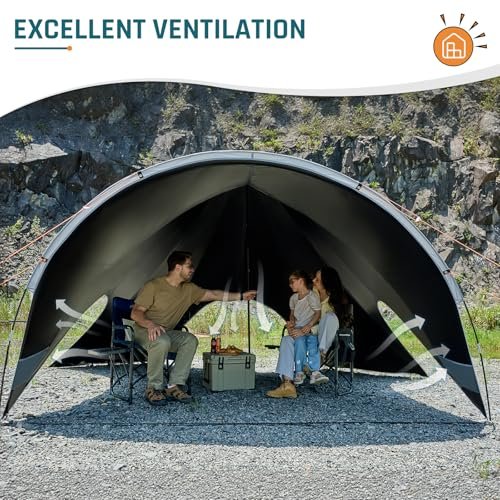
The first thing to check is coverage area. At 167.3 × 110 inches when deployed — that's roughly 14 feet by 9 feet of canopy — this tarp covers a folding table, four to six camp chairs, and a cookstove with room to move between them. The 8'6" center pole height (poles are included) means adults stand upright underneath without ducking. That's the number that separates a shade tarp from a shade tent, and this one clears it comfortably.
The second thing to evaluate is weather resistance. The canopy carries a UPF 50+ rating, which means it blocks over 98% of UV radiation — relevant if you're setting up at noon in July and planning to stay through the afternoon. The waterproof coating handles passing rain and dew; this is a 3-season shade and rain cover, not a 4-season mountaineering shelter. If you're planning to use it as an overhead rain canopy during a sustained storm, stake all corners and use guy lines — the butterfly configuration sheds rain well when properly tensioned, but a loose canopy in wind is a problem regardless of what it's made from.
- Poles included: No sourcing your own center poles — the kit ships complete, which matters if this is your first setup.
- Butterfly configuration: The raised center peak sheds rain to both sides and maximizes standing height at the center. This isn't the same as a flat tarp — the shape actively channels water away.
- Color — Gray: Neutral, doesn't attract heat the way darker colors do, and doesn't clash with existing camp gear.
- UPF 50+: The fabric itself blocks UV, not just the shade it creates. That matters for extended afternoon setups.
- 1-year manufacturer warranty: DMH OUTDOORS backs this product directly — keep your purchase confirmation in case you need it.
How and Where This Tarp Actually Gets Used
The setup that makes the most sense for this tarp is a central camp kitchen or dining area. Drive in, set the poles, stake the corners, and you've got a covered hub for the cookstove, the folding table, and whatever food prep is happening before the rest of the camp gets organized. With 14 feet of span and 8'6" of clearance, two adults can move around under it without bumping into each other or the poles. That's the first campsite job this structure solves.
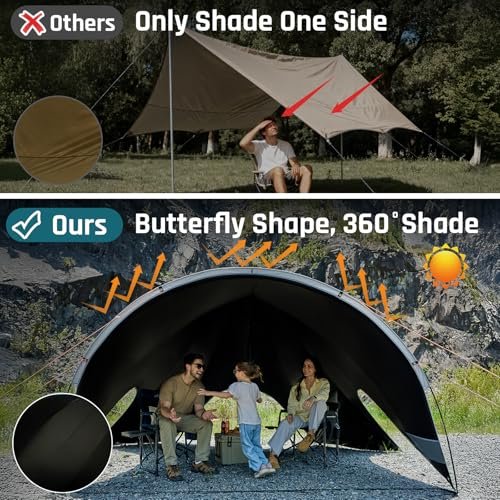
The second scenario is tailgating or day-use picnics. If you're pulling into a park or fairground with no trees for natural shade, a 14-foot butterfly canopy with its own poles is the difference between a comfortable afternoon and a sunburned one. The UPF 50+ rating isn't incidental here — it's the main feature. Setup is fast enough that you're not spending the first 20 minutes of your arrival wrestling with hardware.
A few configuration notes worth knowing before your first setup:
- Butterfly pitch for rain: The raised center ridge channels water to both sides. If rain is coming from one direction, orient the ridge perpendicular to the wind so runoff goes sideways rather than into your camp area.
- Staking matters: With any tall-center canopy, the pole height creates leverage in a breeze. Stake all four corners before you raise the center — this is the step most people skip the first time and regret when a gust arrives.
- Guy lines in wind: If the campground forecast shows sustained wind above 15 mph, add guy lines from the peak and corner grommets to stakes set at a low angle. The canopy handles typical afternoon breezes well when properly anchored; it's not engineered as a storm shelter.
- As a vehicle shade: The tarp's footprint works alongside a vehicle — set up adjacent to a truck bed or van side door as a covered staging area for gear that doesn't fit under the main canopy.
- Backyard and event use: This isn't just camping gear. The same structure works for backyard birthday parties, block parties, or any outdoor event where you need shade over a gathering area and want something with more coverage and head clearance than a standard 10×10 canopy.
What this tarp is not: a backpacking shelter. At the dimensions given, this is a drive-to-site structure. It's also not a full enclosure — there are no walls, which is intentional (airflow is part of what makes shade structures bearable in summer heat), but it means bugs and blowing rain come in from the sides. If your site has persistent evening bugs, pair this with a screen house alongside it for enclosed seating and use the tarp over your cooking and dining area.
Keeping Your Tarp in Shape Season to Season
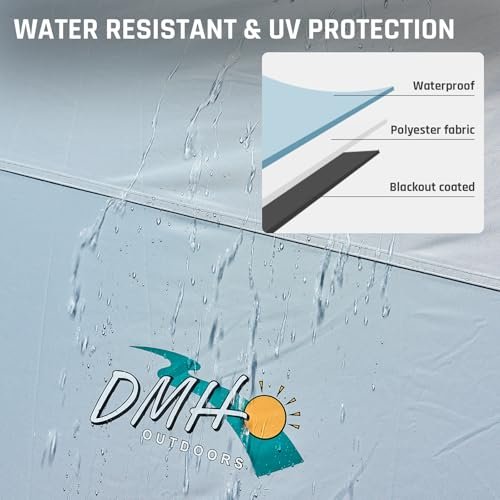
A tarp at this size takes more abuse than most camping gear because it's the first thing up and the last thing packed — it gets wet, dusty, and UV-stressed every trip. A few habits extend its useful life significantly. After any setup that involves rain or heavy dew, let the canopy dry fully before packing it. Rolling or stuffing wet polyester into a bag and leaving it for two weeks between trips is the fastest way to degrade the PU waterproof coating from the inside. If you can't dry it at the campsite, hang it at home before storage.
The poles deserve the same attention as the fabric. After each trip, wipe the pole sections dry and inspect the locking hardware. Sand or grit works into adjustment collars and can cause them to seize — a quick wipe-down at breakdown prevents a frustrating setup next time. Store poles in their bag rather than loose in a truck bed where they can bend.
- UV exposure: UPF 50+ means the fabric is built to handle sun, but the coating doesn't last forever. If the canopy starts to feel stiffer or less supple after several seasons, that's the coating aging. Spray-on waterproofing (DWR treatment, available at camping retailers) can extend its life — apply to the outer face and let it cure fully before the next trip.
- Seam inspection: Before each season, check the seams and grommet reinforcements. A small piece of seam tape (available at outdoor gear shops) patches any separation before it becomes a bigger leak point.
- Grommet care: Metal grommets rust if stored wet. Keep them dry and, if you camp near salt water or in humid climates, a light spray of silicone lubricant keeps them moving freely.
- Off-season storage: Store the canopy loosely rolled or folded — not compressed tightly — in a cool, dry location out of direct sunlight. UV degrades PU coatings even through storage if the bag is left near a sunny window.
- Stake replacement: Stakes bend. Keep a few spare stakes in the kit so a bent corner stake doesn't compromise your tension geometry at the next site.
If you're using the tarp regularly through a full spring-to-fall season, three or four trips per year with proper dry-out and storage in between is realistic use. The 1-year manufacturer warranty from DMH OUTDOORS covers manufacturing defects — it doesn't cover user damage or weather events, so treating the tarp as a tool worth maintaining, rather than a disposable item, is the right frame going in.
Frequently Asked Questions
Does the tarp come with poles, or do I need to buy them separately?
Poles are included. The kit ships as a complete setup — canopy and pole system together — so you're not sourcing hardware separately before your first trip. That's worth confirming because a lot of tarps at this size are sold as canopy-only.
Is this tarp actually waterproof, or just water-resistant?
The canopy is PU-coated polyester rated for waterproof performance — it handles passing rain and overnight dew well in a properly tensioned butterfly pitch. It is not a fully enclosed rain shelter with taped seams like a cabin tent rainfly, so sustained driving rain can enter from the open sides. For overhead rain coverage over a camp table or cooking area, it performs as intended. Plan on staking all corners and using guy lines if conditions get serious.
How much area does this actually cover? Can it fit a table and chairs?
Deployed, the canopy spans approximately 14 feet by 9 feet (167.3 × 110 inches). That covers a standard 6-foot folding table with four to six camp chairs around it, plus a cookstove station at one end, with room to move. The 8'6" center height means adults stand fully upright at the peak — no crouching to reach the camp stove.
Can I set this up alone, or do I need a second person?
Solo setup is realistic but easier with two people for the initial raise. The standard approach: stake all four corners first with the canopy flat, then extend and lock the center pole upward. Having a second person hold the peak while you adjust tension saves time, but it's doable alone if you work from corner to corner on the staking before lifting. First-time setup takes longer — plan for 15 minutes your first run while you get familiar with the pole locking system.
Can I use this in the backyard, or is it only for camping?
It works just as well in a backyard as at a campground. The 14-foot span and 8'6" standing height make it a solid choice for birthday parties, block parties, or any outdoor gathering where you need shade over a seating or food area. The gray color is neutral enough that it doesn't look out of place in a residential setting. Setup and breakdown are fast enough for single-day events.
How does the UPF 50+ rating actually work? Is it meaningful?
UPF 50+ means the canopy fabric itself — not just the shade it creates — blocks more than 98% of UV radiation from passing through. On a midday summer setup where you're sitting under the canopy for three to four hours, that's the difference between walking away with a sunburn and not. Standard shade alone (like a tree canopy) doesn't carry a UPF rating because the light scatters through gaps. A UPF 50+ rated fabric is a consistent, measured barrier — it's a real spec, not marketing language.